

Global population growth and Earth’s finite resources are realities forcing governments and businesses to rethink the “take-make-dispose” linear approach to manufacturing, where items are thrown away at the end of their life cycle. In the circular economy model, products and materials are made to last longer and kept in use longer. Companies from IKEA to Coca-Cola are going back to their drawing boards to design products that can be repaired, reused, remanufactured, or recycled instead of ending up in landfills.
Circular economy
Please note: This item is from our archives and was published in 2020. It is provided for historical reference. The content may be out of date and links may no longer function.
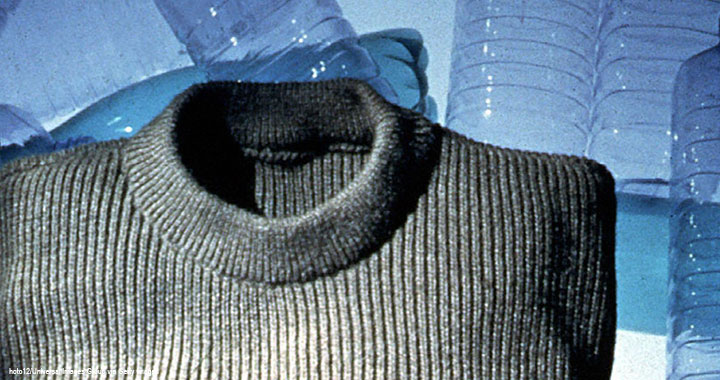
A pullover weaved with fibre made from recycled plastic bottles.