

More than 85% of Africa’s total exports are bound for markets outside the continent. This is starkly different from other parts of the world, where most exports are within the same region. Through the African Continental Free Trade Area (AfCFTA) agreement — the world’s biggest free-trade pact by number of countries (54) — African states aim to boost economic integration by lowering or eliminating tariffs on 90% of goods and services. Negotiations on competition, investment, and intellectual property rights are still underway. The first commercial deal under the pact is set to take place in 2021.
On track for free trade
Please note: This item is from our archives and was published in 2020. It is provided for historical reference. The content may be out of date and links may no longer function.
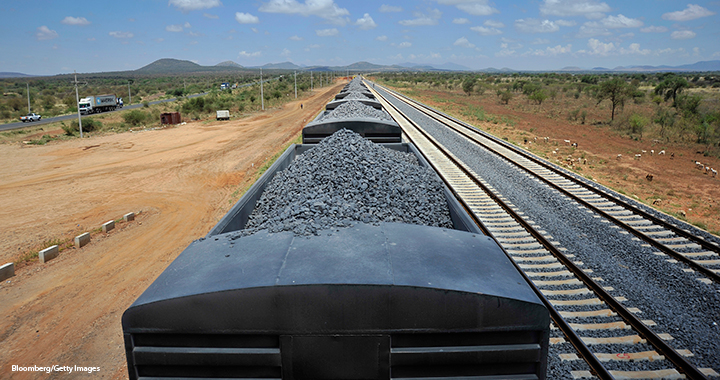
Freight wagons pictured in 2016 carry gravel on the Mombasa-Nairobi Standard Gauge Railway line that connects Mombasa, East Africa’s largest seaport, and Kenya’s capital, Nairobi. Increasing efficiency of transport and logistics in the continent is key to facilitating intra-African trade.