South Africa’s Cape Town region is experiencing a severe drought and has been seeking to limit water consumption in an effort to stave off “day zero” — the point at which most taps would be shut off.
Business and tourism groups and local government issued a joint advisory encouraging businesses to closely measure and manage their water use. The advisory also spelled out business continuity measures to consider and warned businesses that, if the situation escalates and taps begin going dry, they and their suppliers could be affected and their employees may not be able to work because they will be queuing for their daily allocation of water.
Nearly 80% of Cape Town businesses responding to a survey by the Cape Chamber of Commerce & Industry reported that the lack of water had become a threat to their business. The survey, conducted in January, showed that 87% of the respondents had slashed their water consumption by 50% or more. Just over one in four respondents in the chamber survey said they had stopped or postponed investments in their businesses as a result of the water shortage.
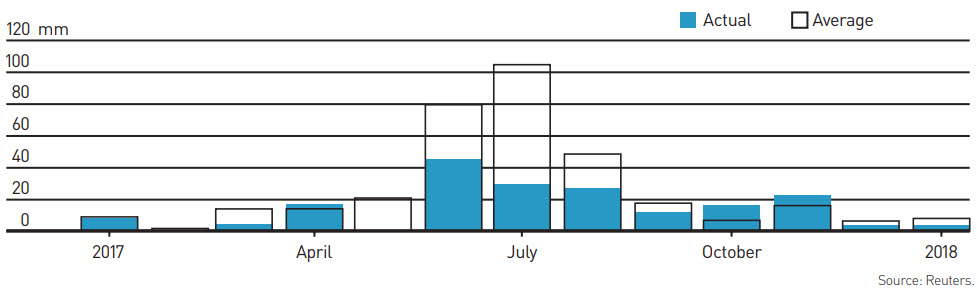
Drought in South Africa
South Africa has declared a national disaster over the drought afflicting its southern and western regions including Cape Town, which may run out of water in the next few months.
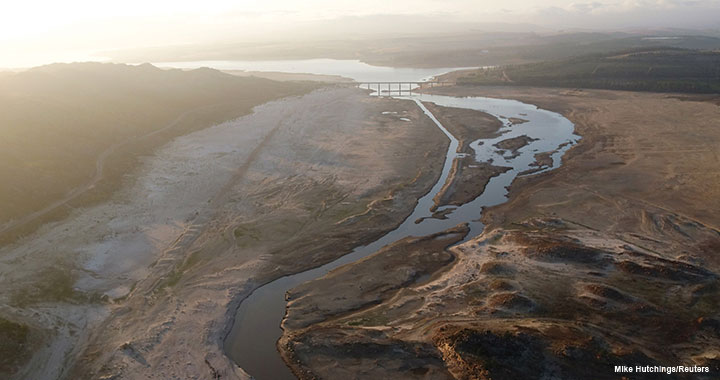
Dried Cape Town
Actual rainfall compared to the mean precipitations since 2014, for each calendar month