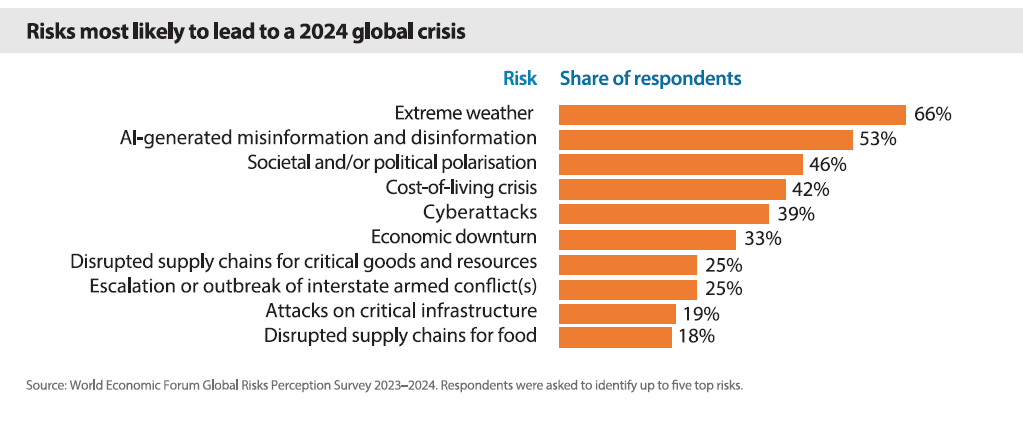
The world is a risky place — and becoming riskier. According to the World Economic Forum’s (WEF) Global Risks Report 2024, just over half (54%) of the experts surveyed anticipate “some instability and a moderate risk of global catastrophes” over the next two years and a further 30% perceive a risk of greater turmoil. Looking ahead ten years, the 30% rises to 63%.
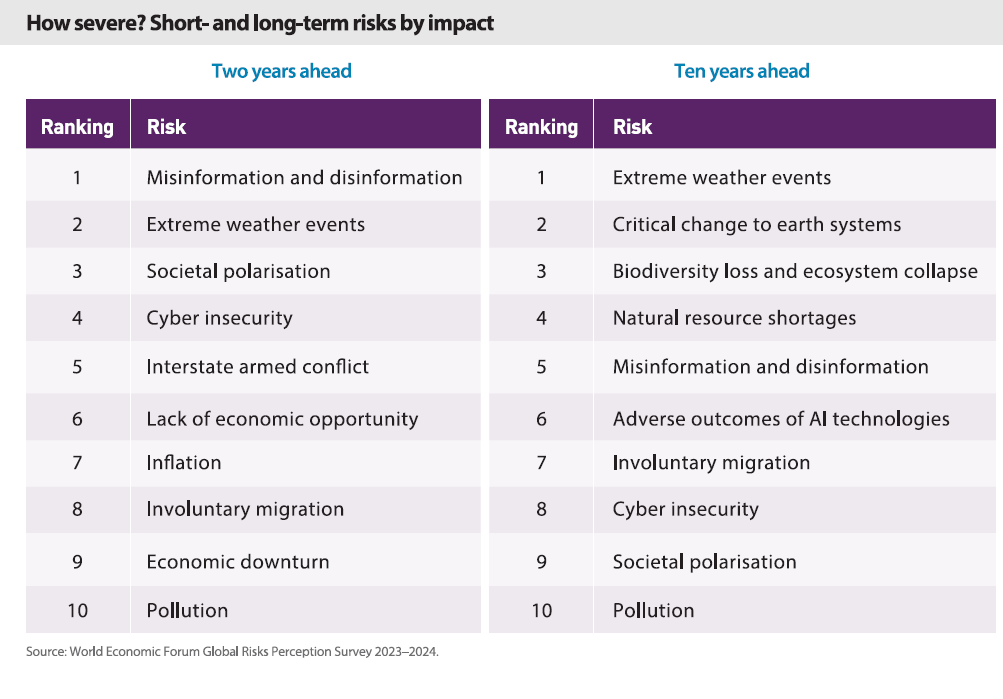
Businesses will need to continue to consider the effects of extreme weather — seen as the key risk for this year and ten years ahead — as well as cyber threats and the intended and unintended negative consequences of artificial intelligence (AI).
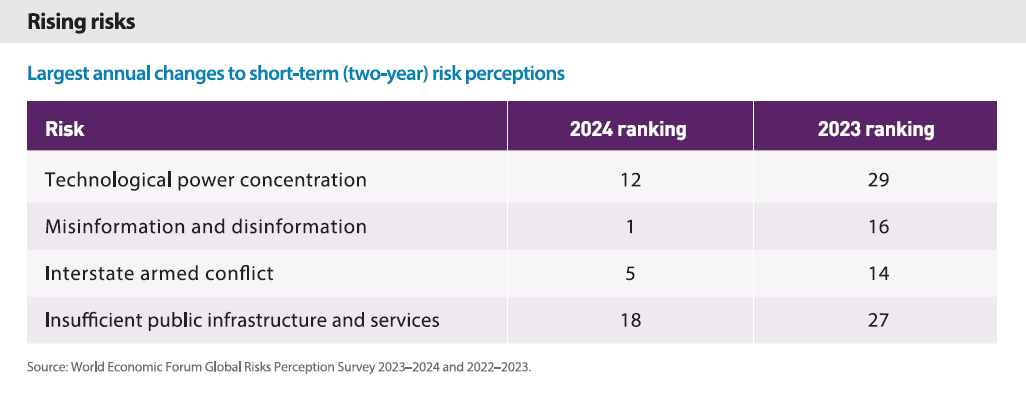
This year’s WEF report also reveals the biggest changes since 2023 to short-term risks, which look two years ahead. Technological power concentration is the highest-rising risk from the WEF’s 2023 survey and report. But also increasing as short-term risks are misinformation and disinformation and armed conflict between countries. The risk of wars is now regarded as the fifth-highest short-term risk (up from a ranking of 14th in 2023). It is also identified as a top five risk by executives in 20 countries in a separate WEF opinion survey.