The impact of generative AI — such as ChatGPT and its competitors — is likely to be a business automation and productivity game-changer. McKinsey & Co. estimates it would raise the financial value created by other types of AI by 15% to 40%.
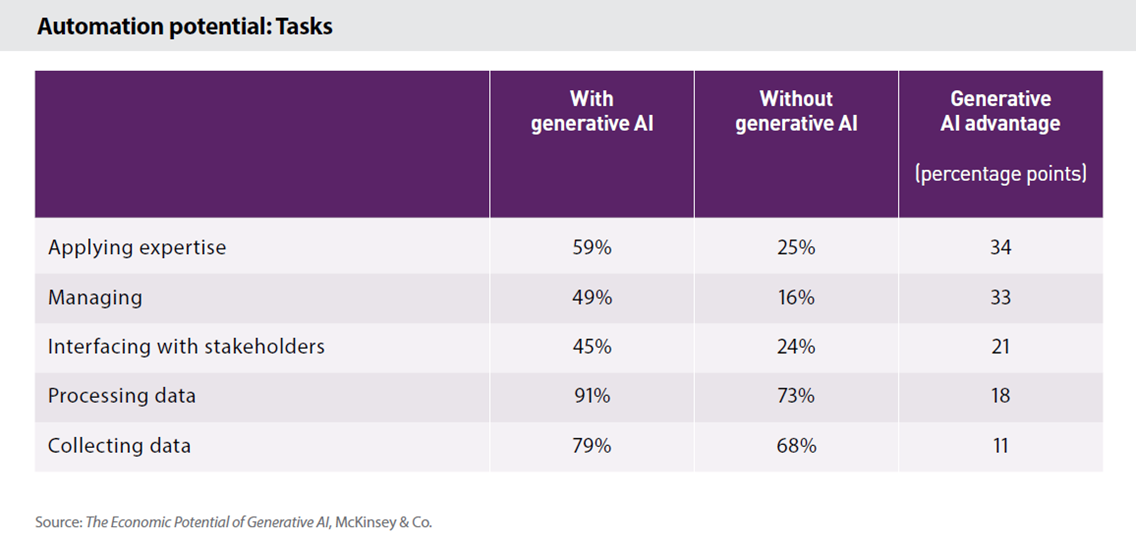
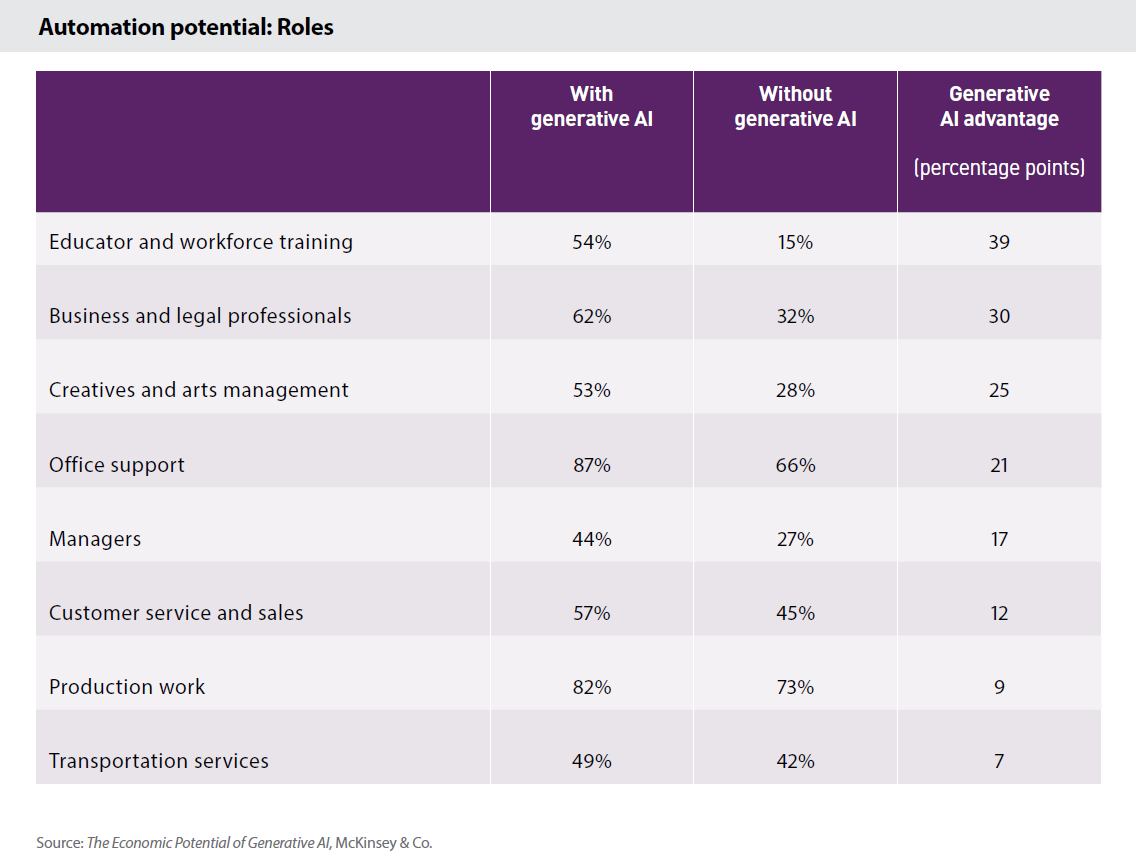
Generative AI and other technologies have the potential to automate tasks that currently take up 60% to 70% of employees’ time, according to a McKinsey report, The Economic Potential of Generative AI.
The biggest impact of generative AI could be seen in four areas: customer operations, marketing and sales, software engineering, and research and development.
Previous automation technology was particularly good at collecting and processing data — and these tasks can be further automated by generative AI’s natural language ability.
However, generative AI’s greatest impact is projected to be on knowledge work — especially tasks involving decision-making and collaboration. For example, according to McKinsey, the potential to automate management and develop talent (ie, the share of these tasks’ worktime that could be automated) increased from 16% in 2017 to 49% in 2023.