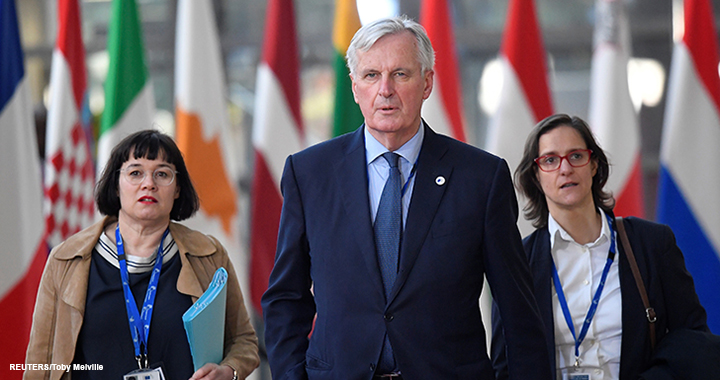
Leaders of the 27 EU countries have agreed to requests from UK Prime Minister Theresa May to extend the existing 29 March deadline for the UK to leave the EU.
In a statement after the EU leaders’ meeting on Thursday, European Council President Donald Tusk set out two scenarios.
Tusk said that if the UK Parliament approves the withdrawal agreement next week, the European Council would agree to an extension for Brexit until 22 May.
He explained that under the second scenario, if the withdrawal agreement is not approved next week, the Council “agrees an extension until 12 April, while expecting the United Kingdom to indicate a way forward”.
He added: “What this means in practice is that, until that date, all options will remain open, and the cliff-edge date will be delayed.
“The UK government will still have a choice of a deal, no-deal, a long extension, or revoking Article 50 [of the Treaty of Lisbon].”
May emphasised that “we are now at the moment of decision” and that the decision of the EU27 “underlines … the importance of the House of Commons passing a Brexit deal next week so that we can bring an end to the uncertainty and leave in a smooth and orderly manner”.
Meanwhile, markets reacted to the news. Sterling was up 0.8% against the dollar, and the FTSE 100 ended the day down more than 2%.
On Twitter, “Revoke Article 50” has been trending and a “Revoke Article 50 and remain in the EU” petition on the UK Parliament website has more than 3.3 million signatures. The UK government is bound to consider petitions of more than 100,000 signatures for debate.
John Walmsley, a London-based commercial lawyer and a CGMA webinar speaker, said there will be a short-lived sense of relief that the UK will not be leaving the EU on 29 March. But he said the EU is eager to highlight that there is limited time to agree on the next steps if the UK Parliament doesn’t agree on a withdrawal deal in the next vote.
“Businesses will have to continue to plan for a worst-case scenario of a no-deal Brexit [if May’s deal is not approved next week] and upscale their contingency planning,” Walmsley said. “This will also apply to small businesses that have not done very much to date, hoping that the prime minister’s deal would go through [the] Parliament at the 11th hour.”
For more Brexit reads:
- “Q&A on Brexit, Forex Risk — and How to Manage It”: Expert observers outline risks and strategies for finance professionals to consider in foreign exchange.
- “Brexit Q&A: Preparing for Currency Fluctuations”: European finance departments may consider tactics to deal with volatility.
- “Preparing Post-Brexit Supply Chains”: Companies need to consider many factors when preparing for Brexit.
- “Asian Businesses Roll Out Plan B for Brexit”: Asian companies have been ratcheting up Brexit planning and activating contingency plans as a no-deal Brexit seems more likely with every passing day.
Podcast episode on Brexit:
- “Planning for Brexit Uncertainty”: Econoday’s Jeremy Hawkins lists several reasons Brexit could harm the UK economy, but he points out a potential boon for accountancy.
— Oliver Rowe (Oliver.Rowe@aicpa-cima.com) is an FM magazine senior editor. Alexis See Tho (Alexis.SeeTho@aicpa-cima.com), an FM magazine associate editor, contributed to this article.