

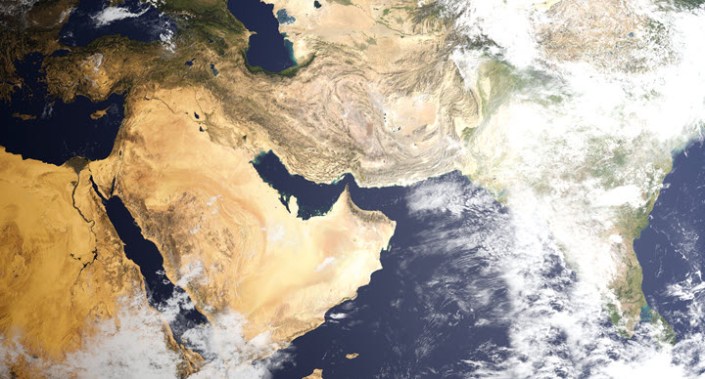
While the conflict in the Middle East may not have come as a total surprise, its scale and intensity have elevated its global impacts. The primary question — which drives the potential scenarios we should consider — is “How long will this continue?”
Businesses urgently need to plan for the immediate impacts and ripple effects. If this ends within weeks, businesses are facing inconvenience and cost. If the conflict continues or even escalates into the medium or longer term, the economic impacts will amplify across the globe. And then we risk seeing a longer-term, enduring impact.
For companies outside the region and not directly affected by the conflict, and those that do not have staff or operations in the Middle East, things to consider include being agile and focusing on three main areas of impact.
1. Focus on energy: Hedging, contracts, sensitivity analysis
Energy markets are under pressure, and this is the key impact area. The issues are primarily gas-related, but oil is rapidly catching up in terms of impacts. Qatar’s LNG (liquefied natural gas) terminal is offline after coming under attack, taking roughly 20% of global LNG supply out of the market with no quick workaround or reserve system to fall back on.
Restarting LNG exports is expected to take up to a month (owing to the gas process’s extreme temperatures), so compared to oil (which operates on a much simpler process), the disruption is going to last longer. This impact will be most keenly felt across Asia and Europe, where gas keeps factories and power grids running.
This also has a significant impact on LNG by-products, such as helium and sulphur, which are the backbone of everything from medical devices to microchips. Fertiliser is also a key product facing disruption, as it relies heavily on gas for production, with an estimated 49% of urea and 30% of ammonia globally (key fertiliser inputs) coming from the Persian Gulf, according to Farm Bureau.
Iranian responses to date appear to be focused significantly on export infrastructure and key shipping routes. Attacks on ports, refinery complexes, and coastal energy terminals are slowing the movement and processing of fuel across the Gulf. Several sites have been hit, including Qatar’s Ras Laffan complex, from which approximately a fifth of the world’s LNG flows. These attacks have tightened the flow of refined products such as diesel and jet fuel, adding pressure to transport, industrial activity, and wider energy availability.
Damage and disruption of these assets adds further strain to an already stressed energy environment. The vast majority of these assets sit behind the Strait of Hormuz, and the very limited export capacity in the Red Sea or Gulf of Oman is not sufficient to ease the supply constraints.
The broader outlook for CFOs and finance teams is becoming clearer. The inflationary risk continues with every day the conflict moves on. Transport costs are insidious costs, as they quickly embed in all physical products that require movement along global supply chains to reach consumers’ homes.
For finance teams, steps here are straightforward and require taking early action:
- Review and refresh hedging policies.
- Look again at contract terms for existing and new contracts to ensure you are aware of and ready for new premia or conditions.
- Refresh sensitivity models to help teams understand what rising prices may do to margins, cash cycles, and cost positions.
2. Supply chains: Delays, detours, and higher working-capital demands
The logistics environment is tightening, with container ships stuck in or around the Strait of Hormuz and many others rerouted around the Cape of Good Hope. Air cargo capacity had dropped by almost a fifth as carriers avoided regional airspace, but it is recovering, albeit with cost surcharges.
Insurers have pulled their war-risk cover from the Strait of Hormuz, leaving many ships without the protection they normally rely on. The US has stepped in with its own reinsurance, offered through its International Development Finance Corporation, offering to insure “losses up to approximately $20 billion on a rolling basis” to keep ships moving.
Unsurprisingly, war-risk premiums have jumped from around 0.25% of vessel value to 1%–3%. To put this into perspective, a $100 million tanker that once paid around $250,000 for a transit is now facing bills that run into the millions.
These combined disruptions chip away at otherwise smooth business operations leading to:
- Delayed turnaround by suppliers.
- Earlier-than-expected inventory depletion.
- Higher freight premiums.
- Greater working capital tied up in stock.
Whilst the focus has been on movements of oil and gas, Dubai is a key transshipment or intermediate point (an estimate points to 75% of total Dubai container volumes that are transshipment). Rerouting freight away from Dubai could be extensive, and it could take a protracted period for replacement capacity to be put in place.
3. Macroeconomic conditions: Planning for inflation risk and slower growth
Most economic forecasters are assigning increasingly higher probabilities to scenarios where growth drops and inflation rises. Price reactions in oil and natural gas markets have tested recent highs, but they have the potential for ongoing volatility and further increases. These would drive expected and actual inflation across major economies, with short-term consequences for central bank decision-making on interest rates.
The practical focus for CFOs should start with liquidity. Ongoing actions should include:
- Monitor payment cycles to support earlier understanding of pressure points.
- Review buffers across upcoming periods to identify when working capital might tighten.
- Track supplier terms and large outflows to add clarity to planning.
- Maintain awareness of foreign exchange (FX) exposures, given the movements in USD in particular.
If energy prices remain elevated or supply disruptions continue, inflationary pressure will impact overall costs, freight pricing, and wage expectations. Regular analysis keeps these movements within view and allows teams to adjust planning frameworks without unexpected shocks.
Credit facilities (especially working-capital related) should be immediately reviewed (and regularly monitored) to maintain the ability to respond to increased working-capital demands as prices spike and feed through supply chains. This rate of transmission will vary according to the sector, but certain sectors with very direct impacts from oil/gas prices such as agricultural inputs, chemicals, and logistics are already seeing prices move higher, with consequences for working-capital levels and cash conversion.
Leadership matters
The conflict in the Middle East brings unpredictability and influences costs, supply chain timings, confidence, and decision-making. Committing to and maintaining vigilance across energy exposure, supply routes, and liquidity gives CFOs awareness and the ability to be prepared for whatever’s next.
Strong fundamentals and steady attention to them support resilience, and resilience supports the business through periods when external events move quickly and information changes by the minute. This is the time to reinforce good discipline and strengthen business foundations to survive and thrive.
— Simon MacAllister, FCMA, CGMA, is a partner and co-head of Geopolitical Strategy at EY Ireland. To comment on this article or to suggest an idea for another article, contact Oliver Rowe at Oliver.Rowe@aicpa-cima.com.
LEARNING RESOURCES
Risk Is Increasing — and Risk Management Is Evolving
It’s time for traditional risk management to evolve. Learn the value of employing tested tools to assess and mitigate risks within your organisation.
WEBCAST
Risk Management Techniques and Tools
Understand the benefits of implementing an enterprise risk management system within your organisation.
WEBCAST
Linking Risk Management to Strategy
Changes in the business landscape are accelerating in speed and complexity. Learn strategies to manage risks within your organisation.
WEBCAST
MEMBER RESOURCES
Articles
“AICPA & CIMA Business Resilience Toolkit — Levers for Action”, FM magazine, 23 July 2025
“Ways to Customise Supply Chains to Reduce Risk”, FM magazine, 27 February 2025
Report