Licensing software on a subscription basis. Storing data in the cloud. Hailing a rideshare service like Uber or Lyft. Working a short-term, on-demand job at a shared workspace. The economy is brimming with business models based on renting rather than buying.
Subscriptions to rent rather than buy clothes is another one of those business ideas. And it’s gaining traction.
Established retailers such as American Eagle, Ann Taylor, and New York & Company have signed on, as have digital startups such as Rent the Runway, which offers designer dresses and apparel, and Rainey’s Closet, which rents special occasion children’s clothes. While most cater for women, some of the services also carry men’s clothing.
Rent-to-wear businesses seem to be thriving while brick-and-mortar retailers struggle to attract shoppers, who increasingly buy online. In August 2019, Le Tote, a clothing rental service founded in 2012 on the subscription box model, agreed to buy the brand, digital channels, and associated inventory of Lord + Taylor, a department store chain founded in 1826.
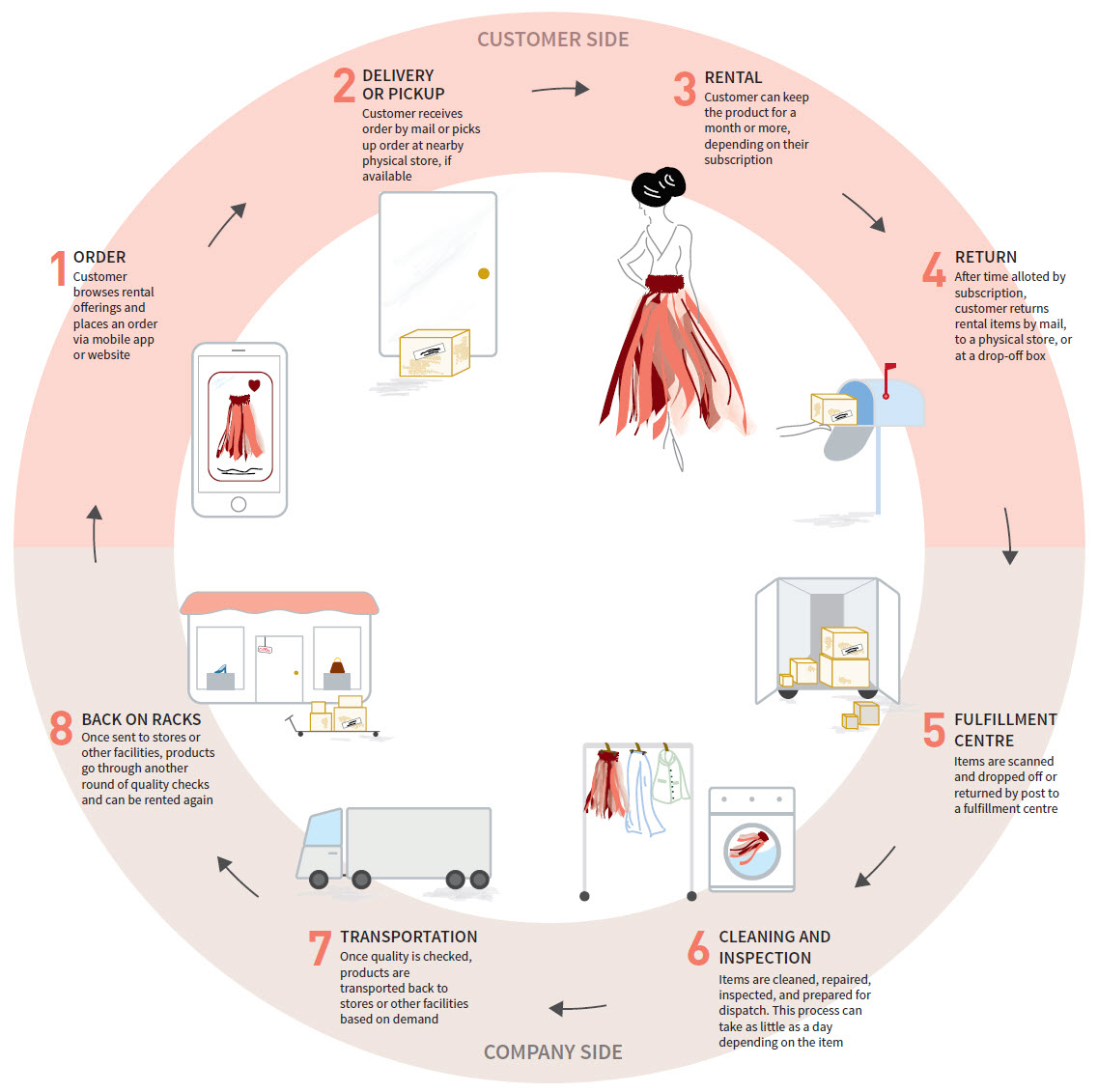
Most rental clothing and apparel services are online and offer monthly subscriptions. Fees to rent range from about $59 to $159 per month. The graphic below illustrates the chain of activities that power the rent-to-wear business model.
Sabine Vollmer is an FM magazine senior editor. To comment on this article or to suggest an idea for another article, contact her at Sabine.Vollmer@aicpa-cima.com.